thoughts

10 Jan 2026

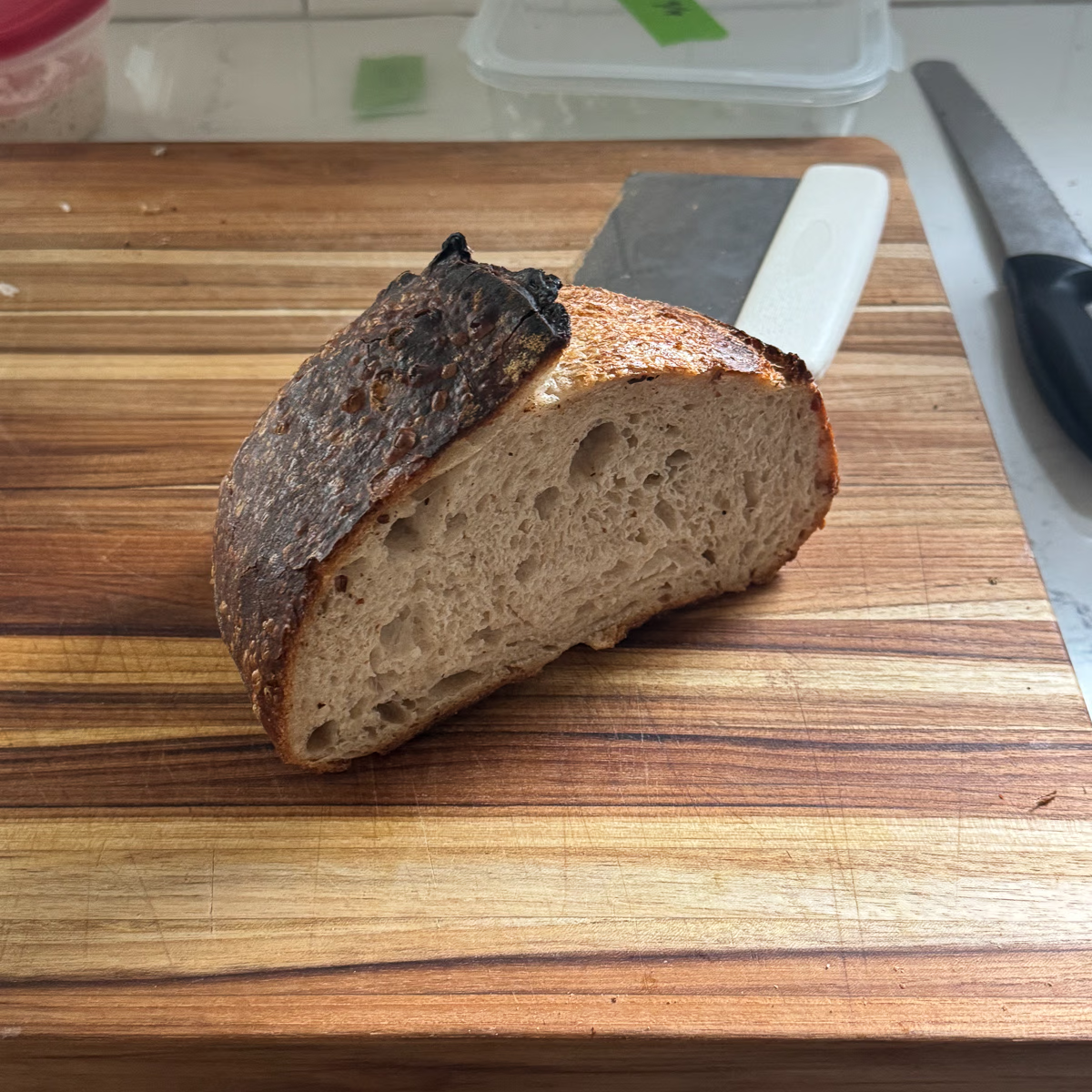
Chad Robertson’s book Tartine Bread teaches the intuition of bread making. Chad layered his knowledge into the instructions, giving the first time reader a step by step guide that hides hints that only make sense on later reads. Only after multiple reads (and many more loaves) of the country loaf recipe did I understand the feeling of what he meant by "…the dough will feel aerated and softer. A well developed dough is more cohesive and releases from the sides of the bowl when you do the turns." On my first read I thought I understood it without knowing what it actually meant, what the clean sides of the container look like when the dough pulls away but leaves a tackiness, what fluffy aerated dough feels like in your hands.

The rhythm of baking naturally leavened doughs forces the learner to practice. Each day you must feed the starter. The night before making a dough you must make the preferment. The mixing and folding and turning of the dough is the same every time. You get good at it fast.
bread

Making bread from just flour, water, and salt is a skill worth learning if you’re interested in baking. Baking the Tartine country loaf over and over gave me confidence to make more complex doughs. I recommend Chad’s book.

9 Jan 2026

baleadas

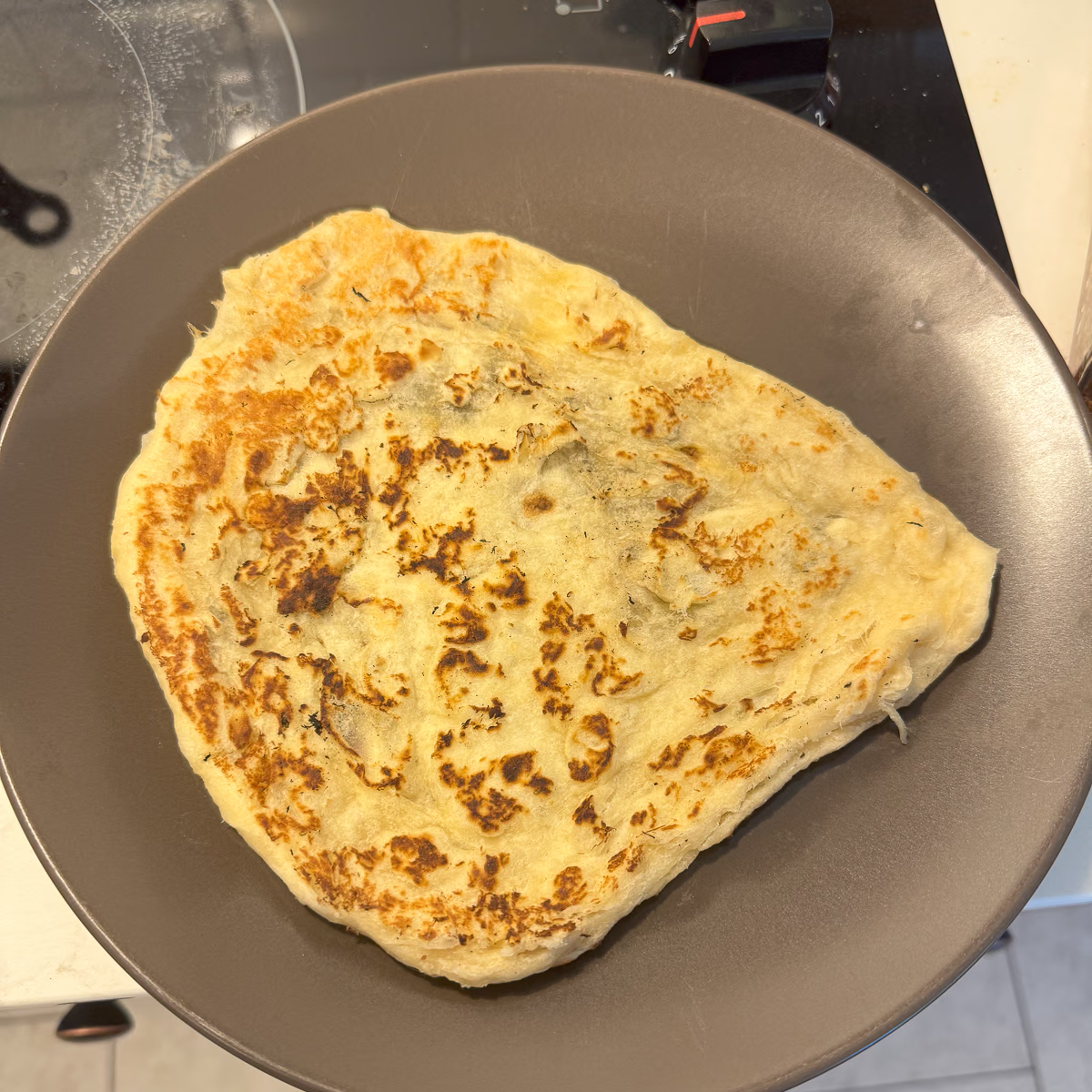
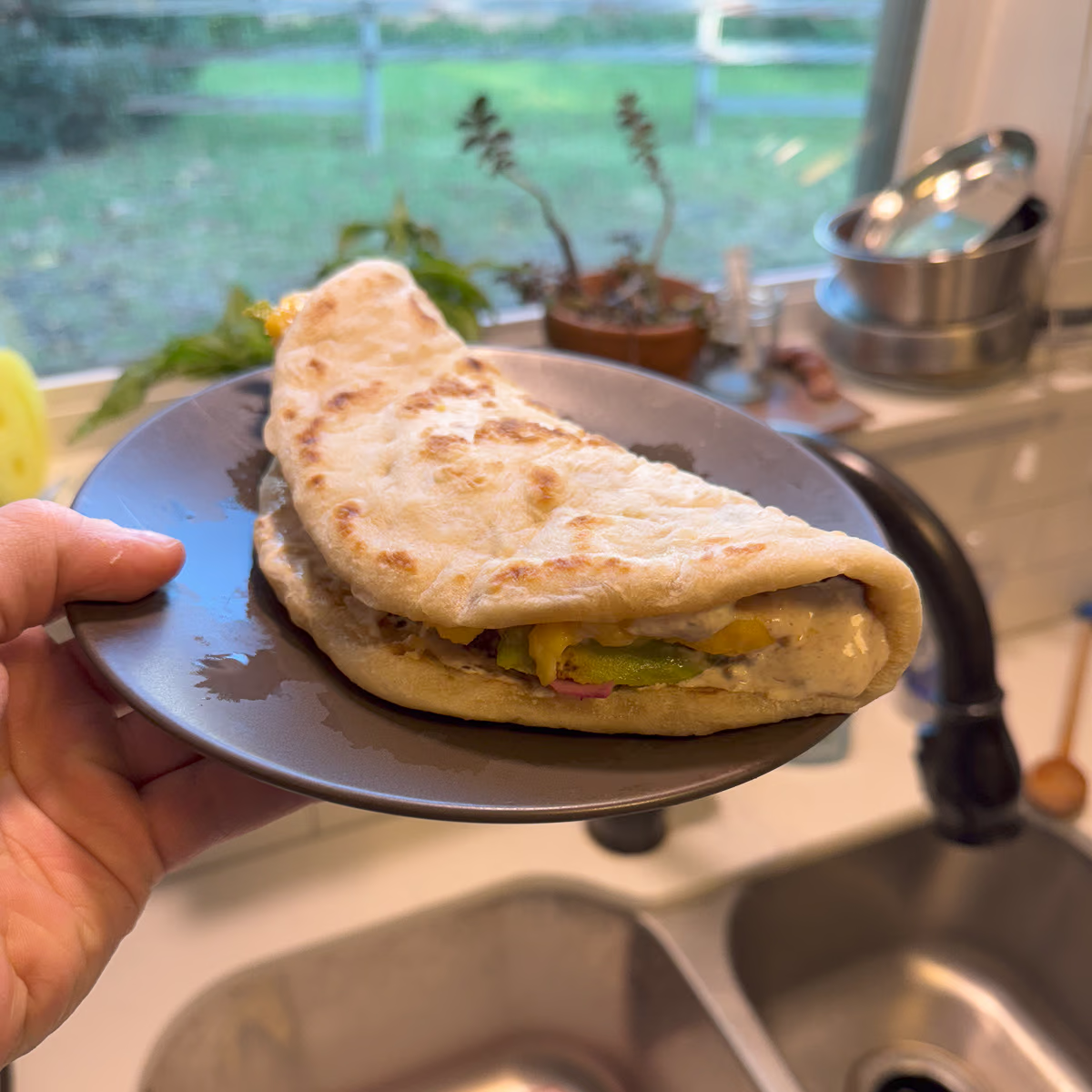
A college roommate introduced me to baleadas, a traditional Honduran dish. A pillowy flour tortilla wraps refried beans, eggs, cheese, and sour cream. My first attempts at making baleadas at home were tasty, but didn’t taste at all like the ones served at Honduran restaurants. Like all dishes made from simple ingredients, quality baleadas requires attention to detail.

Standard American refried beans are pinto beans, but the typical Honduran bean is a small red bean. Goya sells “Central American Red Beans” which taste quite different from pinto. Using these beans and limiting the water content get us as a more “beany” flavor refried bean thicker than a standard refried bean. We want the beans to be thick enough to smear on the tortilla without making it wet. Making the beans from dry is worth it, but Goya’s canned beans would also work.

The scrambled eggs should be cooked until quite dry, not custardy. I like cooking them with a bit of chorizo (cooked ahead).

Honduran sour cream can be found at Fiesta mart, and Salvadoran cream is a good substitute. I’ve found homemade creme fraiche is close enough and much cheaper than buying specialty sour cream. This is the least fussy part, any sour cream would be fine

The cheese normally used is a hard, dry, salty cheese. My roommate explained it as the Honduran equivalent of parmesan. Honduran hard cheese has a unique funkiness that comes through clearly in the final dish, so it’s worth it to buy it. It also lasts forever in the fridge. I’ve seen it at Fiesta with the name “queso duro Hondureno”. A similar Salvadoran cheese is sold as “queso duroblando”.

A thick, soft tortilla is crucial to the dish. Tender dough is achieved by using fat like shortening or lard. I’ve experimented with using yeast or naturally leavening the dough, but the results were more time consuming and temperamental but not different enough than chemical leavening to justify. Resting the dough is essential to allow the gluten to relax, preventing the dough from springing back when rolled out. Once mixed, let the dough rest 20 minutes before shaping into ~55g balls. Once shaped, let the balls rest another 20 before rolling out to a 6-7 inch circle. Cook the tortillas on a well seasoned cast iron or carbon steel pan.

tortilla

I’d like to experiment with these again. I’ll write down a more formal recipe the next time I make them. Big thanks Ric for showing me baleadas!

8 Jan 2026

Is there any real difference between a city and a town in Texas? It feels like a city should be substantively different than a town; maybe a city has a more dense downtown, or population is above a certain size. Texas law disagrees

The Local Government Code, codified in 1987, did away with the distinction of city, town, or village and loosely replaced those terms with type A, B, or C cities.

There are no towns in Texas, only cities. The effective distinction between the types of city are its form of government and what level of property tax it can levy. The government is either a city council (type A and B) or a board of comissioners (C). Property tax is the primary form of funding for cities in the US, so this distinction does impact the scale and quality of services (roads, utilities, etc) provided.

Texas law distinguishes between cities through what powers it allocates to the local government. “Home rule” cities are granted the right to create and enforce any ordinance that isn’t preempted by higher tiers of law (county, state, federal), while “general law” cities are only granted specific powers granted to them by county or state government.

So every named incorporated place in Texas is a city1, but some cities (home rule, type A) are more of city than others.


  1. The Woodlands near Houston are an exception to this. Created as a special district by the Texas legislature, The Woodlands is not an incorporated city despite providing the same amenities typical of a city (emergency services, streets, sewer, etc) through a patchwork of different entities. It calls itself a township, but Texas legislature does not recognize a legal definition of a town. ↩︎

7 Jan 2026

I finished Joe Country by Mick Herron a few days ago. It’s part of his Slough House series. I picked it up after the most recent season of Slow Horses left me wanting more. The book picks up right where the show leaves off, in both the story and how it’s told. The tone and humor of the show clearly draws from the book, and the characters are portrayed almost exactly the same between them.

I’ve started reading Cormac McCarthy’s Blood Meridian. I liked No Country for Old Men. So far it’s a couple of vignettes with the main character. It’s less driven and tense than No Country, but the poetry of his writing makes it no less enjoyable.